What Huawei launched
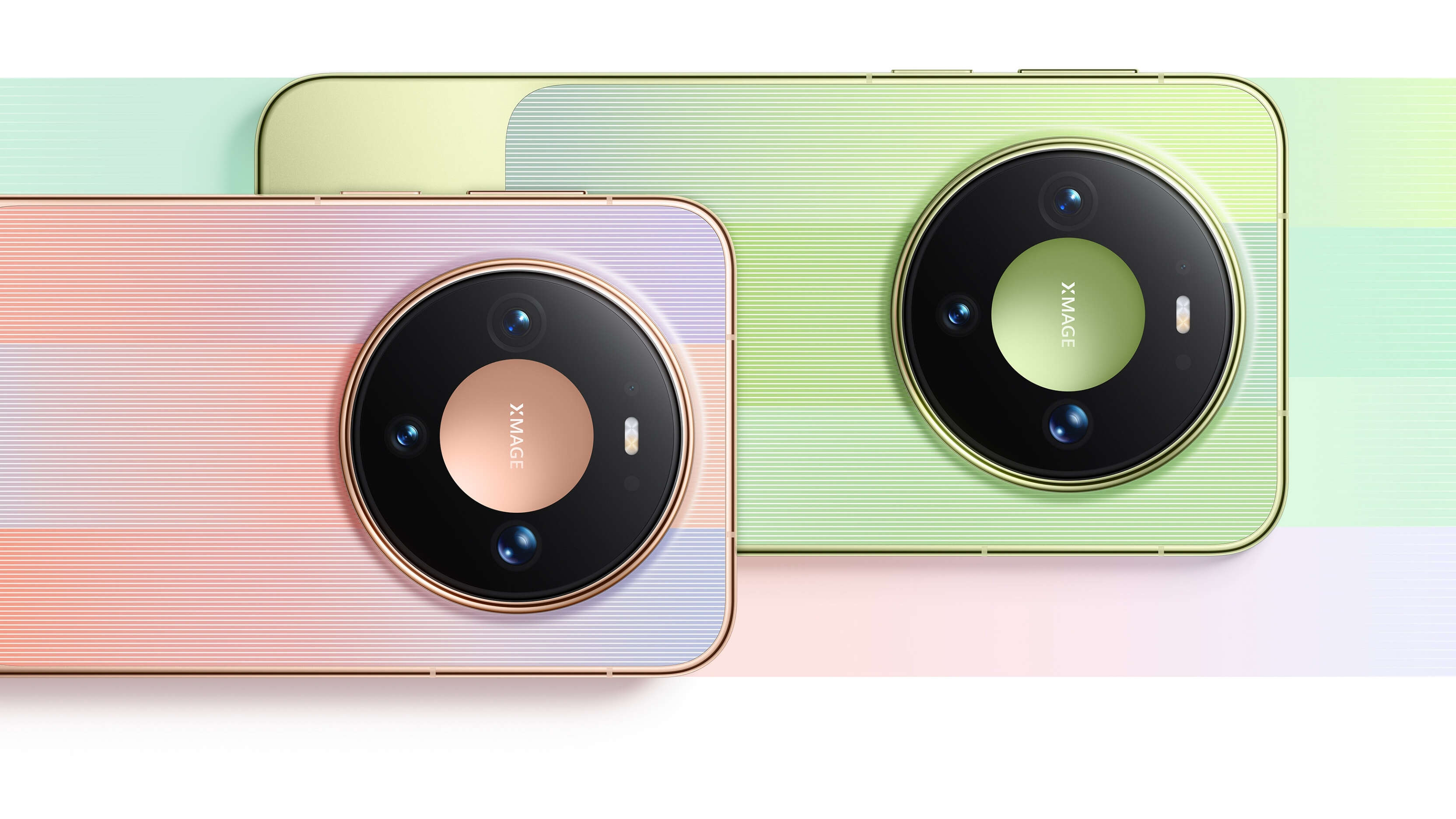
Huawei unveiled the Mate 90 series in China on October 1 and began sales the same day. The standard Mate 90 starts at 5,999 yuan with 12GB of memory and 256GB of storage. The 512GB version costs 6,999 yuan, while the 1TB model costs 8,499 yuan.
All three versions have 12GB of memory. Buyers can choose green, pink, white or black.
A third-party specification summary describes a flat, 6.75-inch OLED screen with a resolution of 2,832×1,280 and a refresh rate of 120Hz, meaning the display can update up to 120 times per second.
Huawei advertises a 6,600mAh battery, 66W wired charging and 50W wireless charging. It’s unclear whether those charging figures represent peak speeds or typical performance. Everyday battery life and detailed charging measurements are also unavailable.
The performance figures need context
Huawei advertises the Mate 90 as using its Kirin 9030 chip. The company claims a 13% improvement in CPU performance, a 54% graphics gain, a 13% improvement in AI processing and a 27% increase in overall device performance.
Those are Huawei’s figures, not independent test results. Coverage describes the comparison point in different ways: sometimes as the Kirin 9020 and sometimes simply as the previous generation. Huawei hasn’t disclosed the workloads or test conditions, so the percentages don’t show that every app or game will become that much faster.
The available material contains no usable independent benchmark for a confirmed retail Mate 90 running the Kirin 9030. One specification site listed a device under the Mate 90 name with a different chip, battery and operating system. Its relationship to Huawei’s launched phone is unknown, so it can’t fairly be used to judge the retail model’s performance.
Huawei also says the Kirin 9030 can render up to 31 million rays per second for ray-traced graphics. Ray tracing calculates how light and reflections behave in a game to make the scene look more realistic. How the Mate 90 handles that workload during extended play remains unknown.
A large battery, but no everyday endurance result
Huawei’s more eye-catching battery claims concern Outdoor Exploration mode across the Mate 90 series. The company advertises up to 36 hours of navigation with the always-on display active and airplane mode enabled, or as long as 15 days in an emergency mode.
Fifteen days equals 360 hours, or 10 times the 36-hour navigation window. But that isn’t a direct efficiency or everyday battery-life comparison because the figures come from different operating modes. Huawei’s 15-day test involved continuous route recording, 30 satellite messages and only limited use of the weather, compass and flashlight tools.
The feature could be useful to outdoor users. It doesn’t show how the standard Mate 90 performs through a typical day of calls, messages, photography, navigation and other apps. The available material also contains no independent test reproducing Huawei’s outdoor endurance figures.
What the cameras promise
Huawei advertises three rear cameras: a 50-megapixel main camera with optical stabilization and an F1.4–F4.0 continuously adjustable aperture, a 50-megapixel telephoto camera with 4× optical zoom, and a 40-megapixel ultra-wide camera.
The company says its branded color system improves color accuracy by 37%. No independent camera comparison is available to show what that figure means for photographs or video.
A specification list can describe the camera hardware. It can’t establish whether the Mate 90 takes better pictures than its predecessor or competing phones.
HarmonyOS 7 upgrades remain limited to mainland China
The Mate 90 ships with HarmonyOS 7. Huawei advertises AI assistants, connections between devices and remote file sharing, along with an AI-based security system designed to detect scam calls, harmful apps and fraudulent scripts.
Huawei says the wider HarmonyOS 6 and 7 ecosystem had passed 85 million phones, tablets and PCs by September 7. It also reported more than 400,000 apps and services across 18 categories. Those figures cover the whole ecosystem, not the Mate 90 alone.
HarmonyOS 7 upgrades are currently available only in mainland China, according to Huawei, with overseas plans to be announced later. The company hasn’t specified the Mate 90’s international availability, regional software setup or access to services outside China.
Huawei also says the chip’s Mobile Security Processor supports post-quantum cryptography—security methods designed to withstand future attacks from quantum computers. The available information doesn’t identify the algorithms, external certifications or independent security evaluations behind that statement. For now, it remains a Huawei claim rather than a demonstrated advantage.
Water resistance isn’t a blanket guarantee
Huawei advertises IP68 dust and water resistance at depths of up to six metres, along with IP69 resistance to high-temperature, high-pressure water jets.
The company has published specific IP69 test conditions for some wearable devices, but not for the Mate 90. Its guidance for wearables says high-temperature water-jet testing isn’t the same as protection in a hot shower. It also warns that liquid damage from use in unsuitable conditions can fall outside warranty coverage.
That document applies to wearables, so it doesn’t establish the Mate 90’s test conditions or warranty terms. Phone-specific guidance remains unavailable. Buyers therefore shouldn’t assume that the wearable rules apply perfectly to the Mate 90—or that its ratings guarantee warranty coverage for water damage.
How this was reported
- Strongest primary sources: Huawei’s Mate 90 purchase guide, HarmonyOS 7 FAQ and IP-rating guidance.
- Important independent sources: Sina Finance established the launch timing and prices, while Comss.ru documented the limits behind Huawei’s outdoor endurance claims.
- Major unresolved facts: Independent retail-device performance, camera and battery tests; international availability and software; Mate 90-specific water-damage warranty terms; and technical evaluation of Huawei’s post-quantum security claim.
- Corrections and contact: No corrections or desk contact details were included in the reporting material available for this article.