The price difference needs context
Vivo’s official Indian store lists the V80 at ₹62,999 with 8GB of RAM and 128GB of storage. The Oppo F35 Pro 5G launched at ₹45,999 with 6GB and 128GB.
That leaves ₹17,000 between the entry models, but they do not have the same amount of RAM. Oppo also launched an 8GB-and-128GB version at ₹49,999 and an 8GB-and-256GB version at ₹54,999.
Vivo’s store shows an MRP of ₹111,999 for the base V80 beside a ₹62,999 selling price—a difference of ₹49,000. The selling price is the useful number for buyers. A steep reduction from the listed MRP does not make a phone good value by itself.
Oppo has the larger battery on paper
The F35 Pro 5G has an 8,000mAh typical battery and supports charging at up to 80W. The V80 has a 7,200mAh typical battery and supports charging at up to 90W when used with Vivo’s original charger and cable.
Oppo therefore has an 800mAh capacity advantage. Think of battery capacity as the size of a fuel tank: it tells you how much energy the phone can hold, not precisely how long it will run. There is no matched independent endurance test for these two phones here.
The V80 has been tested on its own. A 91mobiles review found that it lasted through a full day of regular use and had enough charge left for part of the next day. It also ran for 18 hours and 36 minutes in PCMark’s battery test. That result applies to the reviewer’s test conditions, not every pattern of daily use.
The cameras serve different priorities
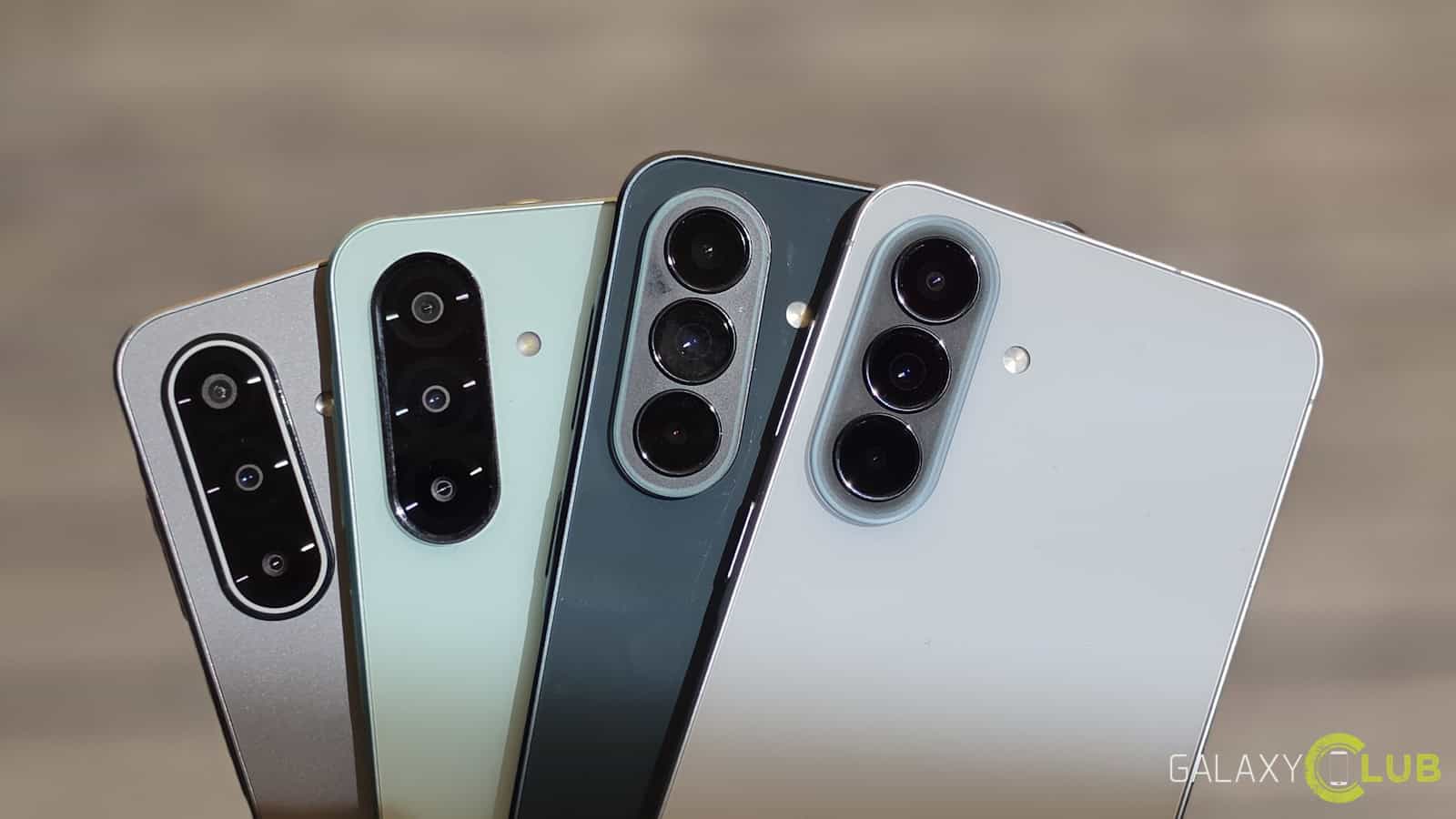
The V80 has three rear cameras: a 50MP main camera, a 50MP telephoto for zoomed shots and an 8MP ultra-wide for wider scenes. It also has a 50MP front camera with autofocus.
Oppo’s official specifications list a 50MP main rear camera with optical image stabilisation, an 8MP ultra-wide and a 50MP front camera. Its front and rear cameras can record video at up to 4K resolution and 30 frames per second.
The dedicated telephoto camera is the main hardware difference in Vivo’s favour. It does not prove that the V80 takes better photos. No matched independent test here shows how the phones compare on low-light images, zoom quality or video stabilisation.
Software support may matter too. According to 91mobiles, the V80 is due to receive four Android operating-system upgrades and six years of security updates. Whether Vivo has consistently fulfilled similar promises across earlier product cycles is not established here.
The displays have plenty in common
Both phones have high-resolution displays with refresh rates of up to 144Hz. Vivo’s screen measures 6.59 inches and has a resolution of 2750×1260. Oppo’s measures 6.78 inches at 2772×1272.
Vivo rates its display for a 5,000-nit local peak, while Oppo lists 1,800 nits in high-brightness mode. These figures use different brightness measurements, so they should not be read as a direct 5,000-versus-1,800 contest.
During GSMArena’s hands-on use, the V80 remained bright enough outdoors and comfortable for low-light reading. Comparable independent display testing for the Oppo is not available here.
Performance is still an open comparison
The V80 uses a Snapdragon 7 Gen 4 processor. A 91mobiles review reported noticeable stutters while moving through the interface and switching between tasks. It said performance was not the phone’s strength at ₹62,999.
The Oppo uses a MediaTek Dimensity 7360 MAX processor. Digit described it as a capable mid-range chip rather than one designed for flagship-level gaming. Precise independent speed and sustained-performance results for the Oppo are not available here, so the evidence does not show which phone is faster overall.
That gap matters. More independent testing is available here for Vivo than for Oppo. Missing Oppo results should not be treated as evidence of a weakness in the phone itself.
Durability ratings are not damage guarantees
The V80 carries IP68 and IP69 dust-and-water-resistance ratings, along with a drop-resistance certification. Digit lists an IP69K rating for the Oppo F35 Pro 5G, referring to resistance against high-pressure, high-temperature water jets under standardised testing.
Those ratings do not mean every spill, drop or water-damage claim will be covered. Detailed Indian warranty treatment of water and impact damage remains unknown for both phones.
Oppo’s offers do not guarantee a 20% discount
Oppo’s launch promotions included up to 10% instant bank cashback and an exchange bonus of up to 10%. The available terms do not establish the caps, eligible payment methods, exchange valuation or whether the offers can be combined.
There is no single confirmed post-offer price for every buyer. Oppo’s established launch prices are ₹45,999, ₹49,999 and ₹54,999 for its three configurations.
How this was reported
- Strongest primary sources: Vivo’s V80 store listing, Vivo’s V80 specifications, Vivo’s V80 product page and Oppo’s F35 Pro 5G specifications.
- Important independent sources: 91mobiles, GSMArena, ETV Bharat and Digit provided review findings and launch-price context.
- Major unresolved facts: Matched camera, battery and performance tests; complete promotion rules; warranty exclusions; and long-term delivery of software promises.
- Corrections and contact: Published October 9, 2026, and last updated October 9, 2026. Contact the BulletNews editorial desk to report an error.